

Both CMEs and ad boards are HCP-facing events. It seems to be common sense that both require scientific slide decks with robust evidence. Do we really need different styles for both?
Absolutely! Both are entirely different types of events, with a different purpose and certainly need different styles. They cannot substitute one another !! I often get slide deck requests and whether the slide deck is for therapy area training, a CME, or an ad board, it seems like the table of contents looks almost identical!!
At a CME, the major purpose is to share information with the attendees while at an ad board the purpose is to obtain information from them. Of course, both activities can occur at both types of events, but for the medical affairs and marketing team organizing these events, the main purpose remains as mentioned above.
Hence, when creating slides for a CME, one needs to ensure that the audience remains interested in listening to the information that is being shared. Along with the clinical data, it helps to use a lot of infographics, media, anecdotes, sometimes even a little humor, and importantly, breaking the monotony by interspersing with some interactive slides to lighten the information overload. These interactive slides could be in the form of questions, an audience poll related to the specific disease area, or even something outside medicine (these indeed help keep the audience engaged). Presenting information as bullet points on a slide is passé. Get more creative and don’t let the slides look like a grocery list or a to-do list. Here are 3 slides showing how a boring list of bullet points can be presented more creatively.

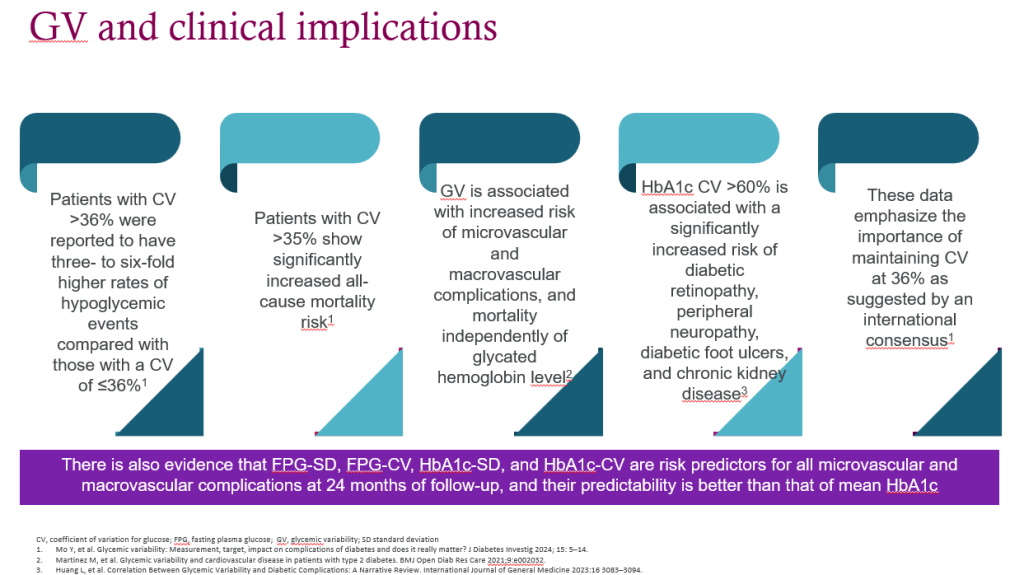
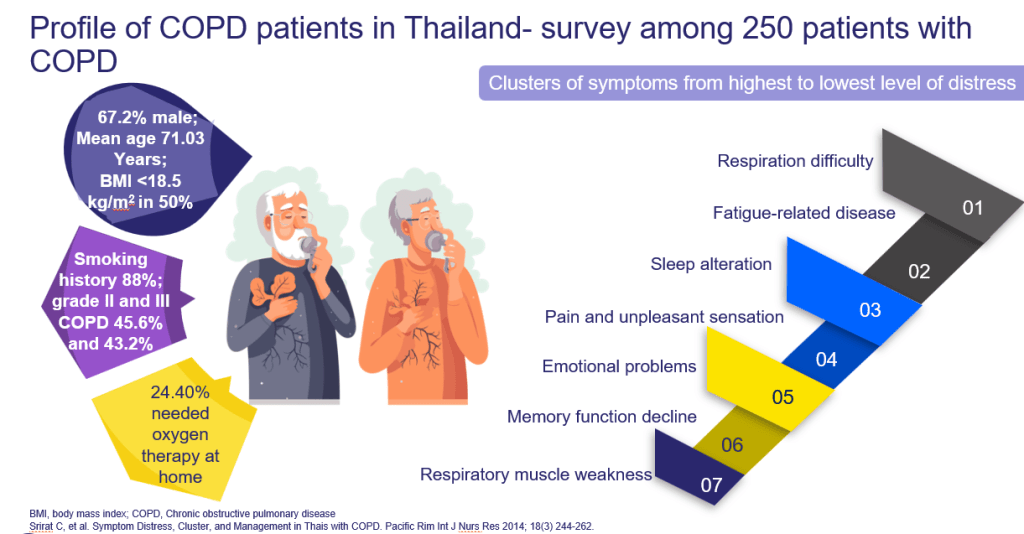
More importantly, the CME slide deck should tell a story from start to finish. It is a fact that the audience will not read or remember all the data presented. That is where the skill in creating decks that tell a story, in the way a clinician’s mind thinks in real-world practice, is important. Also, the selection of content is very important. The clinician is definitely not interested in just being shown the data of some published studies that the organizers (pharma/diagnostics/medical devices) want to share. What would sustain interest is something that (s)he does not come across routinely and something that would make him/her think about implementing the new information in clinical practice.
Of course, there could be interactive CMEs where there is a Q & A session as well, which can also be used for gathering real-world insights. Even in such slides, perhaps a little touch of creativity would enhance the professional look of the slides.
In contrast, in an ad board, the objective is to allow maximum time for the experts to speak so that meaningful discussions can happen and robust insights can be obtained. Hence, in an ad board, the opening speaker’s slide deck should be very short, ideally just to set the context of the meeting. This could include the objective of the meeting and the reasons for these objectives, such as challenges in diagnosing and/or treating a condition. Include a few and only the most recent, burning data points related to the objective of the meeting. Remember, ad boards involve KOLs and we should not be subjecting them to listening to definitions, epidemiology, and pathophysiology. It is a cruel waste of not just their precious time but an insult to their knowledge and intellect.
After the opening speaker, depending on the flow of the ad board that has been decided, the subsequent slides should be only questions or have a single bullet point for discussion, with a moderator ensuring everyone speaks and is heard. In case the flow that has been decided is such that there will be multiple speakers with a round of discussion after each presentation, each speaker should speak no more than 10 minutes. Thus, a maximum of 10-15 slides per speaker should be planned. These slides should be simple, and not loaded with data from several clinical studies. They should be such that they smoothly transition into a discussion as the speaker ends the slides. Essentially, each speaker should be just setting the context for the discussion by putting up the problem at hand, based on the data available. The golden rule is to let the participants have more talk time rather than the speaker(s). You will find some useful ad board templates here https://medicomindspro.com/case-studies-and-samples/#advisoryboard and some more resources related to advisory boards here https://medicomindspro.com/resources/#Advisory-Board-Meetings
In a nutshell, in a CME you need to make the slides interesting enough for people to listen while in an ad board you make them interesting enough for people to speak
 MedicoMindsPro