
Writing the manuscript and formatting according to the journal guidelines
In this final part of the series, we will look at some important things about writing a manuscript
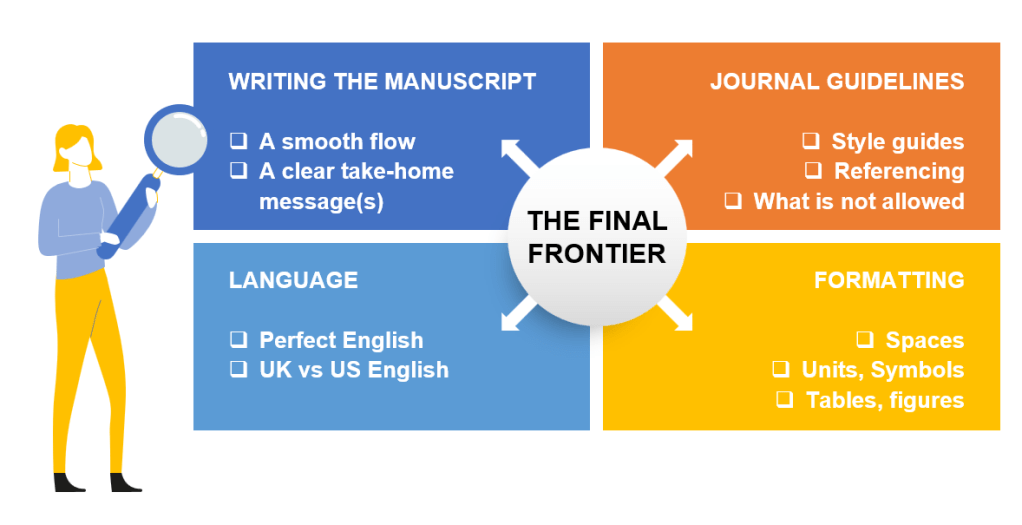
Writing the manuscript is about how well you can communicate the research and its outcomes. I will divide this into 2 parts: 1. The content of the manuscript itself 2. The journal guidelines.
Assuming you have followed all the steps discussed in the previous 3 editions on the topic, by now you would have a robust study design, the objectives well defined, the statistical analysis plan before data collection, robust and complete data, and the statistical analysis completed. The manuscript should be able to cover all of it comprehensively, without deviating from what was planned in the protocol. Of course, the journal is unlikely to ask for a copy of the protocol, but non-adherence to the protocol could affect the quality of data and the research itself, and the reviewers could have a lot of questions that need to be convincingly answered.
The standard structure for a research article more or less is the same: Abstract, Introduction, Methods, Results, Discussion, Conclusion, References. The manuscript should read like a continuous story, ending with a take-home message. The abstract should be able to ‘stand alone,’ i.e., anybody reading the abstract should be able to understand the study and its outcomes without reading the full text. Since the word count of the abstract is very restricted, a common mistake I have noticed is that authors often write some findings in the Conclusion section of the abstract. This is incorrect; the conclusion cannot mention anything that has not been included in the Results section of the abstract. The conclusion is supposed to be a summary of the results. In the main text, the Introduction and Discussion sections should be in sync with the Methods and Results. It is a good idea to write the Results section first so that you have clarity about the story you are trying to convey. The introduction section should be able to build a strong case for why the study was conducted. It usually begins with 2-3 lines about the epidemiology of the disease. It should then mention some information from the current literature (similar to what your study has tried to investigate) and what are the gaps in the existing evidence (you will find some ideas on these in parts 1 and 2 of this series). It should end with the objectives of your study and the gaps in existing literature the study attempts to fill/address. The Methods section should describe the type of study (e.g., prospective, retrospective), details of the institutes at which the study was conducted, the details of ethics committee approval and patient consent, the inclusion/exclusion criteria, sample size, rationale for the sample size, primary and secondary objectives, parameters studied, duration of follow-up and number of patient visits, a detailed statistical analysis plan, and what was done in case of missing data. The Results section should have the patients’ demographic parameters, as well as each of the parameters, analyzed, including the statistical significance (p values) and confidence intervals wherever applicable. Here it is also important not to duplicate the information if the details are going to be presented in a Table. The most important part is the Discussion section. It should begin by summarizing the key results of the study (it should not include a lot of numerical data). Each result/outcome should then be compared with existing literature (always good to compare it to research literature from the last 5 years as much as possible) and if possible, explain the differences if any. Having a limitations section is very important, as no study is an ideal study. This should be followed by a suggestion for further research. If the journal guidelines do not include a separate conclusion section, 2-3 lines on the conclusion of the study can be added here.
Journal guidelines: Most indexed journals have very strict formatting guidelines and absolute adherence is a must. Moreover, the list of guidelines is long and even a single punctuation error is unacceptable. I am listing below examples of most guidelines I have come across, though all journals might not necessarily have all of them. However, the big ones like Lancet will usually have all of these guidelines.
English: The journal might specify which English is to be used- American or British. It makes a big difference because some spellings and conventions differ between the two. For e.g., ‘analyzed’ vs. ‘analysed.’ In British English, dates are presented in the order of date, month, and year (e.g., 21 June 2010), while in American English, the month precedes the date (June 21, 2010).
Style to be followed – e.g., AMA 10th guidelines/11th guidelines, APA style, Chicago style. These differ a lot in terms of formatting.
Page size, margins, spacing, font: What page size to use (e.g., A4 or letter), how much margin is required on all 4 sides, and whether the manuscript should be single-spaced, 1.5-spaced, or double-spaced. What font and what font size is to be used?
Indentation, hyphens, text alignment: Whether a new paragraph should be indented, whether hyphens are allowed, and whether the text is to be left-aligned or justified.
Spacing: spaces before and after symbols e.g., ‘ = ‘ or ‘=’. Even if this is not specified, consistency is expected. A single style is to be consistently followed for all symbols throughout the manuscript.
Style to be followed for writing units
Page and line numbers: Whether to number pages, if yes, where? Are line numbers required? If yes, should they be continuous or restart on each page?
Writing numerals: Whether all numbers are to be written as numerals or those up to ten are to be spelled out. Also, how to write a range of numbers (whether to use a hyphen or en dash).
Which abbreviations are allowed/not allowed?
Word count limits- How many words are allowed in the title, abstract, main text, no. of references, tables, and figures allowed?
Title page: How many words/characters are allowed in the title, and are abbreviations allowed/not allowed? Is the first letter of every word to be capitalized or only the first word? Is a running title required- how many words and characters are allowed? How to write the author names- first name+ surname, initials+surname, surname+first name, surname+initials. Are the affiliations to be indicated by superscript letters or numerals? What additional information is required on the title page -e.g., Word count, Conflict of Interest Disclosures, etc? Abstract and keywords: Whether it should be structured/unstructured. If structured, what should be the titles of the subsections? What is the word count allowed? What details are mandatory? Keywords are usually to be chosen from the MeSH list.
Main text: What should be the titles of the sections? Should they be numbered? Should they be left-aligned or center-aligned? What font and formatting is required? Details of ethics approvals are always required in the Methods section. Whether subsections are allowed/required in the Methods and Results section and if yes, how many and should they be numbered? Whether a conclusion section is required/allowed. Is there a word limit for any of the sections?
Citations: There are very very specific guidelines for these – e.g., superscript, brackets, parentheses, first author name with the year, first two authors’ names with the year. It also needs to be checked whether the punctuation marks (periods, commas, colons, semi-colons) are to be placed after the citation or before. Whether there should be a space before the citation.
Writing ‘p’ values: Some journals might have very specific guidelines for writing ‘p’ values. e.g. exact values might be required, a ‘0’ before the decimal might not be allowed for values below a certain number, and significant ‘p’ values might need to be written in bold or italics.
Formatting references- This is again very important and not even a single spacing error is acceptable.
There are specific guidelines about how to write author names (first name+ surname, initials+surname, surname. first name, surname.initials.), how many authors’ names are allowed before et al., and how to write the journal name (abbreviated, italics, bold, followed by period/comma or not), year (to be written after the authors’ names or after the journal name, to be followed by comma or colon/semi-colon, followed by space or not), volume number (bold, plain, followed by comma or semi-colon, followed by space or not), page numbers (full form or shortened form, separated by hyphen or en dash), doi required or not.
Formatting tables: Where to place the tables, the design/layout of the table, and how to indicate footnotes to the table (there is often a risk of symbols to be followed in the given order to indicate the footnotes).
Formatting figures: Where to place the figures, what format is allowed, and what resolution is required. In fact, there are very detailed guidelines for figures which vary from journal to journal, for each type of figure e.g., charts, colored images, histological images etc.
Disclosures: This section is usually required and includes conflict of interest, acknowledgments, funding, etc.
Additional sections: Some journals require additional sections -e.g., what is already known, what this study adds to the existing knowledge, etc. which have limits as low as 85 characters including spaces.
I have covered most types of journal guidelines. Note, however, that not all journals have all the above guidelines, but most leading journals do. If these seem intimidating, seeking professional help for writing the manuscript can be considered.
Before I sign off, I hope this series will be of help in planning your research and achieving a successful publication. Please do not hesitate to write to me in case you have any queries. Best wishes for your publication!!!
 MedicoMindsPro